



The Wall Street Crash of 1929 Quiz
Test your knowledge of the Wall Street Crash of 1929—its causes, Black Tuesday, the Great Depression, and how it reshaped global finance and regulation.



The Wall Street Crash of 1929: The Day the Markets Collapsed
Introduction
The Wall Street Crash of 1929 was one of the most devastating financial events in modern history. Often referred to as the Great Crash, it marked the end of the Roaring Twenties and the beginning of the Great Depression. The collapse of stock prices wiped out fortunes, ruined businesses, and shook global confidence in the financial system. Understanding the crash is essential to grasp how speculation, human psychology, and systemic weaknesses can lead to economic disaster.
The Roaring Twenties and the Boom
The 1920s in the United States were a time of economic growth, technological innovation, and cultural change. The rise of consumer goods, automobiles, and household appliances fueled prosperity. The stock market mirrored this optimism, soaring as more Americans invested their savings in shares.
Speculation became rampant. Many investors bought stocks “on margin,” borrowing money to purchase shares in hopes of quick profits. By 1929, stock prices had far outpaced the actual value of many companies, creating a dangerous bubble.
The Crash Begins
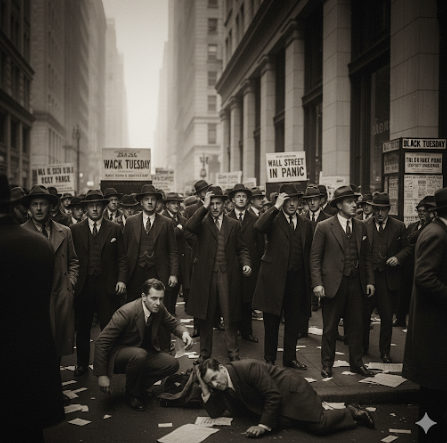
The first signs of trouble appeared in early autumn. On Thursday, October 24, 1929—Black Thursday, panic gripped Wall Street as stock prices began to plummet. Crowds of desperate investors gathered outside the New York Stock Exchange, trying to sell their shares before losses deepened.
Although bankers temporarily stabilized the market, the panic returned the following week. Black Monday (October 28) and Black Tuesday (October 29) witnessed catastrophic declines. Billions of dollars in value evaporated within days, and the market collapsed.
Causes of the Crash
Several factors combined to create the conditions for disaster:
-
Excessive speculation: Investors gambled on stock prices without considering actual company performance.
-
Buying on margin: Borrowed money magnified losses when prices fell.
-
Lack of regulation: The financial system lacked safeguards against risky practices.
-
Unequal wealth distribution: Many Americans could not sustain the consumer spending that fueled growth.
The crash was not caused by a single event but by a combination of systemic weaknesses and unchecked optimism.
The Great Depression
The Wall Street Crash triggered the Great Depression, the worst economic downturn in modern history. Banks failed, businesses closed, and unemployment soared. By 1933, nearly one-quarter of the U.S. workforce was jobless. The collapse spread worldwide, as global trade shrank and nations struggled with debt and economic instability.
For millions of ordinary people, the Depression meant poverty, hunger, and uncertainty. The psychological scars of the crash shaped a generation and changed attitudes toward risk and speculation.
Government Response and Reform
The U.S. government initially struggled to respond, but by the mid-1930s, President Franklin D. Roosevelt’s New Deal programs sought to restore confidence and rebuild the economy.
Key reforms included:
-
The creation of the Securities and Exchange Commission (SEC) to regulate the stock market.
-
The introduction of Glass-Steagall Act reforms to stabilize banking.
-
Public works programs to reduce unemployment and stimulate growth.
These measures reshaped American finance and sought to prevent another crash of similar magnitude.
Legacy of the Crash
The Wall Street Crash of 1929 remains a defining event in financial history. It demonstrated the dangers of unregulated speculation, the fragility of confidence, and the global ripple effects of financial collapse.
Today, the crash serves as a cautionary tale for investors, regulators, and policymakers. It underscores the importance of financial safeguards, transparency, and the need for balance between optimism and realism in markets.
Conclusion
The Wall Street Crash of 1929 was more than a market event—it was a turning point in world history. It ended an era of exuberance, plunged millions into hardship, and reshaped the global economy. A quiz on this topic offers a chance to explore the causes, consequences, and lessons of one of the most dramatic financial collapses ever recorded.
Download our App Now!
Join the ranks of true trivia champions and quench your thirst for knowledge with Masters of Trivia – the ultimate quiz app designed to test your wits and unlock a world of fun facts.
Challenge your brain, compete with friends, and discover fascinating tidbits from diverse categories. Don't miss out on the exhilarating experience that awaits you – get started now!